Making cross-border spatial planning tangible
Making cross-border spatial planning tangible
An interview with Hélène Rouchet about her doctoral thesis
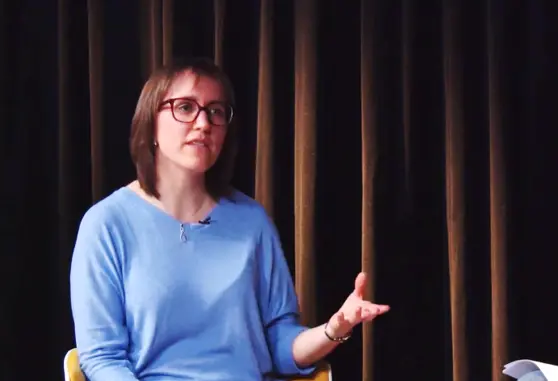
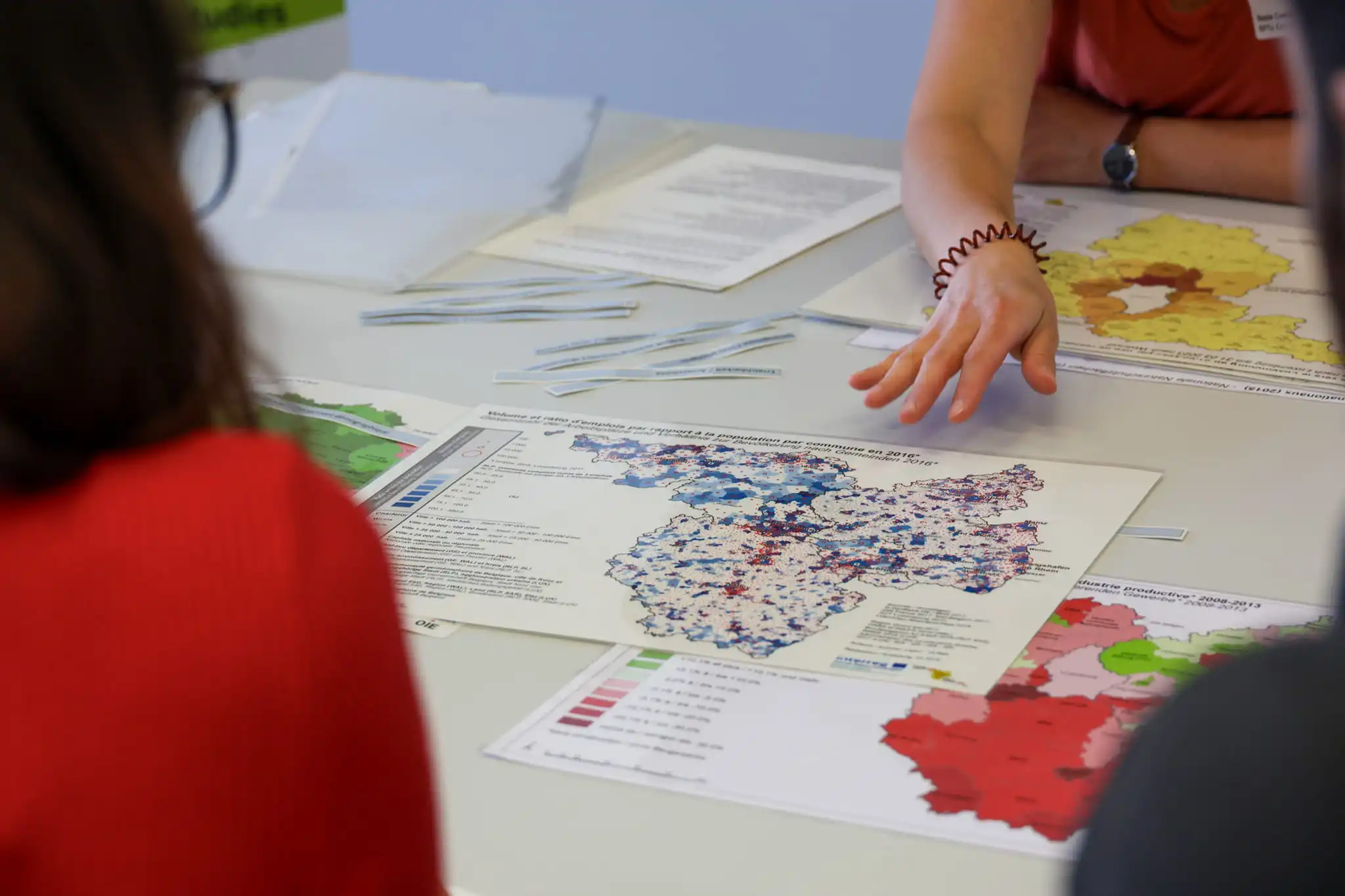
Cross-border spatial planning is a key area of UniGR-CBS's work. In her doctoral thesis, Hélène Rouchet (University of Liège) analyses how simulation games can be used to simulate cross-border spatial planning processes for training purposes. In this interview, she discusses the context of her research, her collaboration with the UniGR-CBS, the main findings of her analysis, and how simulation formats can add value to training and practice in cross-border spatial planning.
UniGR-CBS: Ms Rouchet, your thesis focuses on training future planners and the relationship between planning practitioners and policymakers. How did this research project come about?
Hélène Rouchet: The starting point was based on recurring observations from planning practice and teaching. Spatial planning, especially at a municipal level, is heavily influenced by the interactions between experts, administrative bodies and elected political representatives. However, these stakeholders have very different knowledge bases, roles and decision-making constraints. Furthermore, while practitioners benefit from specific training, the professional development of elected representatives in this field often happens informally, through learning on the job. Given this, I wondered how these complex interactions could be systematically understood and reflected upon from the outset of initial training.
UniGR-CBS: Simulation games are central to your work. Why did you choose this format?
Hélène Rouchet: The simulation game allows us to simulate real-life planning situations in all their complexity without oversimplifying them from a training perspective. Participants must make decisions in uncertain situations, negotiate conflicting interests, and understand institutional frameworks. This format is particularly relevant for spatial planning training, as it draws on not only disciplinary knowledge, but also practical skills, specific communication abilities, and a reflective approach.
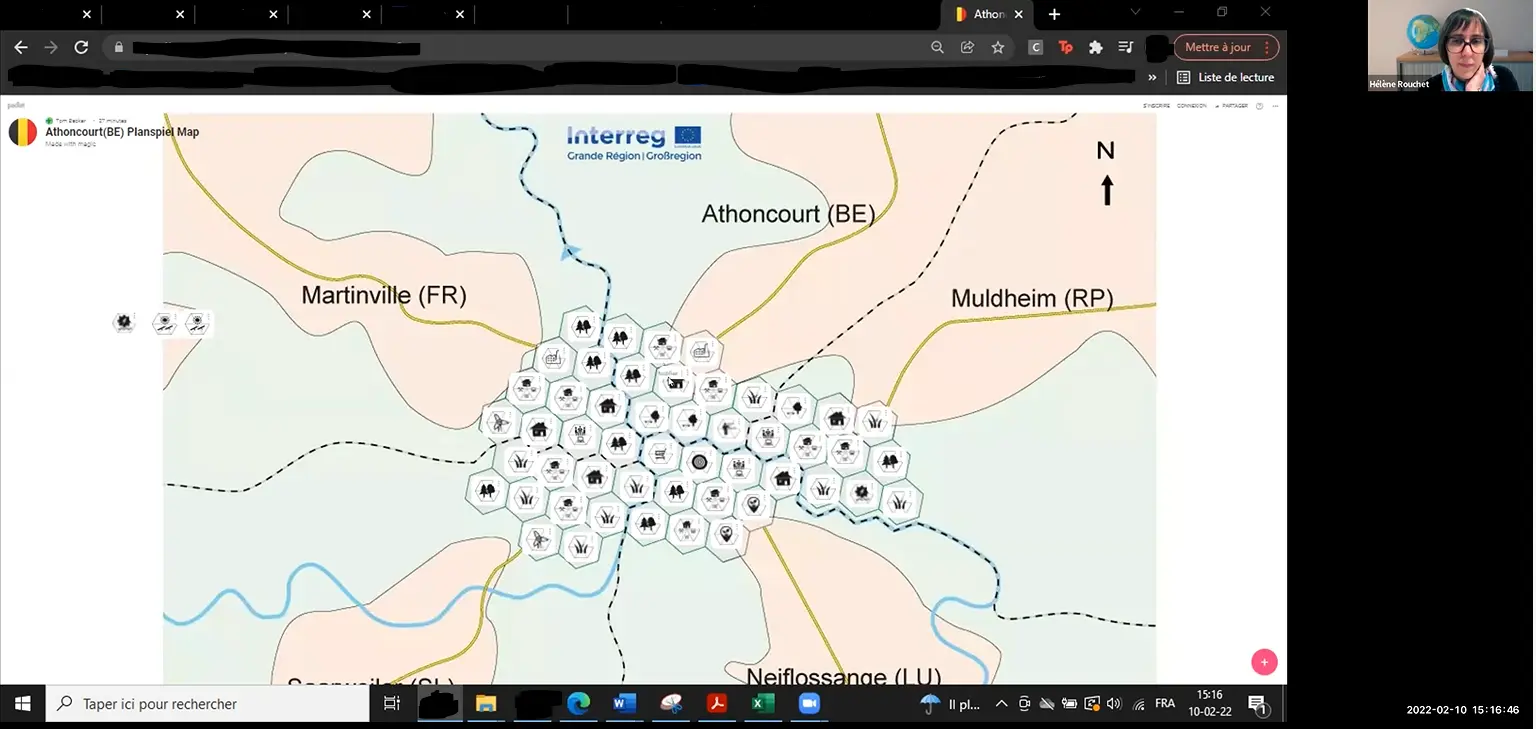
UniGR-CBS: The simulation game was implemented as part of a training module for the UniGR-CBS working group Spatial Planning. How important was this institutional context for your research?
Hélène Rouchet: The setting of the working group was crucial. It provided a cross-border environment that brought together different planning systems, legal frameworks and professional cultures. It also enabled collaboration between students, young practitioners, experienced professionals, and local elected representatives. This configuration enriched the content of the simulation game and significantly deepened the analysis of the learning processes. Furthermore, organising this type of training module requires significant logistical, coordination and moderation support, which was available within the group.
UniGR-CBS: What are the main results of your analysis?
Hélène Rouchet: One of the key findings is that simulation games effectively contribute to developing key professional skills, particularly in managing complexity, uncertainty, and negotiation processes. Participants develop a better understanding of the logic specific to different groups of stakeholders, as well as the often non-linear dynamics of planning processes.
The structured reflective phase is important. This phase makes implicit experiences explicit, consolidates learning and promotes its transfer to the professional context. Without this reflective phase, the simulation game would simply be an intense experience rather than a sustainable learning tool.
UniGR-CBS: What impact does the cross-border nature of the planning situation have on there dynamics?
Hélène Rouchet: The cross-border context reveals and amplifies existing difficulties. Differences in skills, instruments and planning traditions become particularly apparent and must be actively considered. At the same time, it becomes clear that many problems cannot be solved by technical means alone, but also involve communication, institutions and politics. The simulation activity makes these dimensions both tangible and open to discussion.
UniGR-CBS: What added value do you see for future cross-border spatial planning processes?
Hélène Rouchet: Above all, the added value lies in the capacity-building of the people involved. Those who learn from an early stage to manage differences, translate perspectives for other stakeholders and adopt a reflective stance towards their own role are better prepared for real cross-border planning processes. In addition, research shows that simulation formats are not only a relevant tool for analysing cross-border cooperation, but also for actively strengthening it.
UniGR-CBS: Finally, what opportunities does your thesis create for research and teaching?
Hélène Rouchet: The thesis argues for the systematic integration of learning formats based on experience and reflection into the training of planners. It also demonstrates the significant contribution that research in didactics can make to the development of planning practices, particularly in cross-border contexts. Thus, I consider this thesis to be an invitation to strengthen the links between research, teaching, and practice.
Thank you very much for this interview.
Further reading
Rouchet, Hélène (2025) : Formation des futurs aménageurs et relations praticiens – mandataires publics : conception et implémentation d’un module de formation. Doctoral thesis, Université de Liège. https://hdl.handle.net/2268/337567
Contact