
Complexity explains nothing as long as it is merely asserted
Complexity explains nothing as long as it is merely asserted
References to so-called 'complex borders' are omnipresent in Border Studies. Although the term seems critical and contemporary, it often remains unclear. What exactly is being addressed when borders are discussed as 'complex'? What is lost when complexity remains analytically inconsequential?
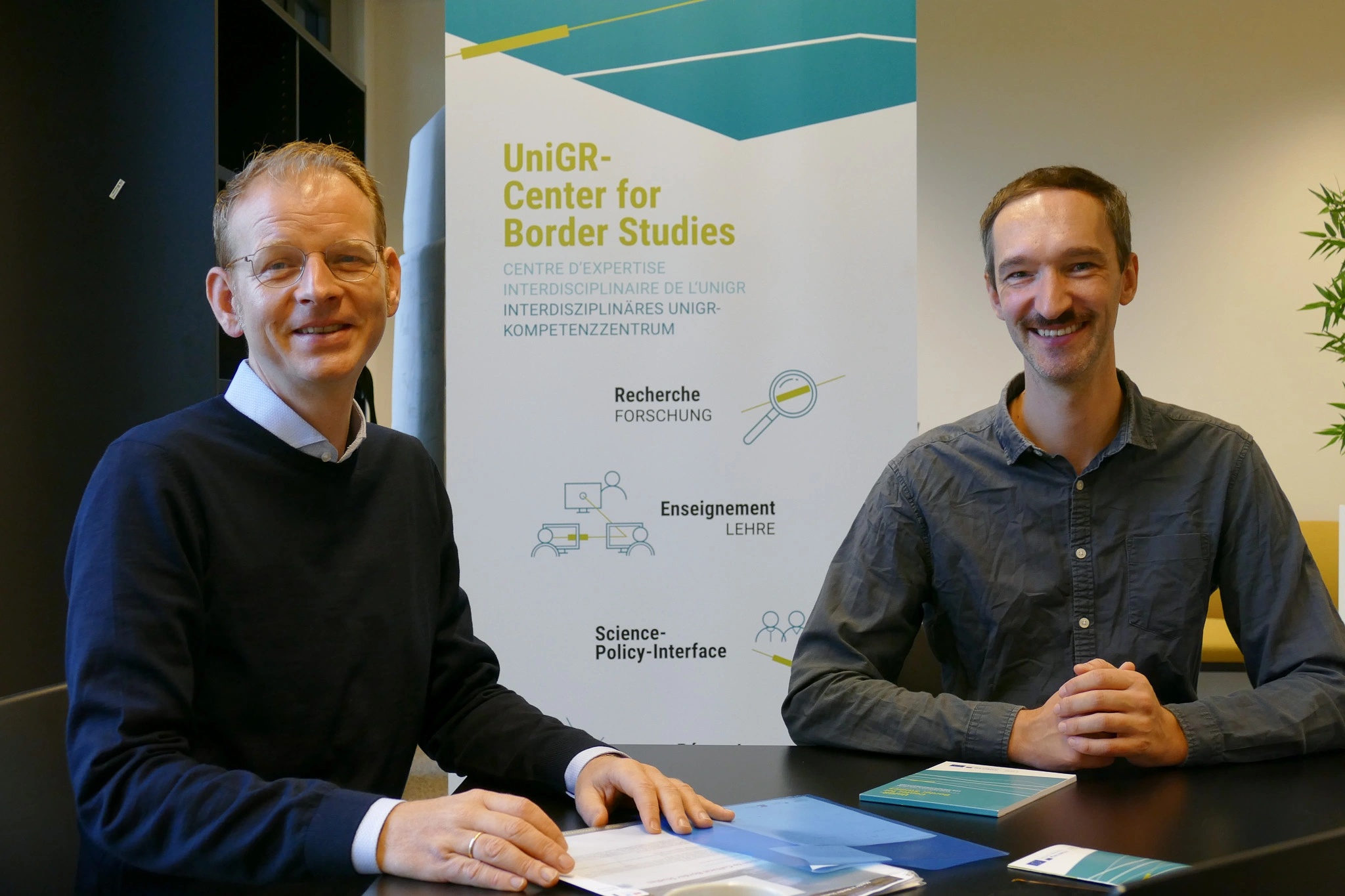
This is where the podcast episode comes in. In this episode, Dominik Gerst (University of Duisburg-Essen) and Christian Wille (University of Luxembourg) discuss how a well-considered concept of complexity can change our view of borders.
Rather than using complexity as a mere label, they approach borders as relational structures in which people, institutions, practices, and technologies converge in unpredictable constellations. Consequently, borders are not perceived as stable orders, but as emergent formations that unfold situationally and are in constant motion.

The conversation makes it clear that borders cannot be explained by linear causes or additive models. Instead, their efficacy arises from the interplay of heterogeneous elements that are performative, contradictory and contingent. It is precisely when orders of the border become fragile, irritating or conflictual that their complexity becomes apparent.
This episode introduces a recent debate in Border Studies about how borders can be thought as evolving orders rather than fixed entities. It is intended for listeners who wish to gain an understanding of the contributions and limitations of complexity thinking in considering borders.
This podcast was produced during Dominik Gerst's visit in 2024 as a guest researcher at the UniGR-Center for Border Studies at the University of Luxembourg.
More information about Dominik Gerst's research stay.
Listen to the podcast episode here
Contact